
Laser Hair Removal for All Skin Tones: What You Need to Know
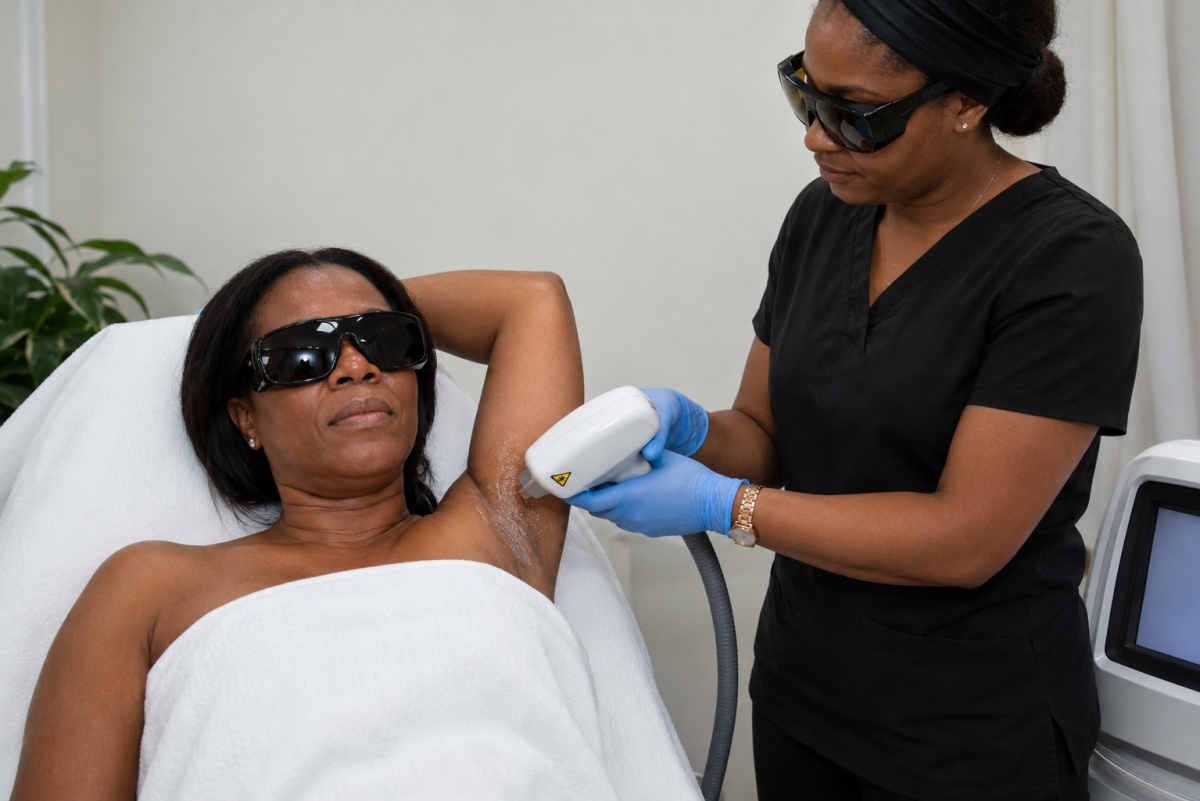
If You Have Been Told It Is Not for You, Hear Us Out
If you have melanin-rich skin and you have been dismissed, given vague warnings, or quietly turned away when asking about laser hair removal, we want to say something directly: that experience was unacceptable, and it was based on outdated thinking.
Here in Birmingham, a significant part of our community has deeper skin tones, and laser hair removal for dark skin is not just possible. It is safe, it is effective, and it is something we do with great care at MiBella Wellness. The difference is technology and expertise. Both matter enormously.
Why Skin Tone Is a Factor in the First Place
Understanding this actually empowers you to ask the right questions before booking anywhere. Laser hair removal works by targeting melanin in the hair follicle. The challenge with darker skin is that the skin itself contains higher concentrations of melanin too. Early laser systems could not distinguish between follicle melanin and skin surface melanin, which is how burns, scarring, and hyperpigmentation happened. That technology gap was real.
Dermatologists classify skin types using the Fitzpatrick scale, a system that runs from Type I (very fair, always burns) to Type VI (deepest complexion, never burns). Fitzpatrick Types IV through VI, which include many Black, Hispanic, South Asian, and Middle Eastern skin tones, need specific laser technology to be treated safely. Laser hair removal for all skin tones is now fully achievable because that technology exists and has been validated by peer-reviewed research. The key is making sure your provider is actually using it.
The Laser That Changed Everything for Skin of Color
The long-pulsed Nd:YAG 1064nm laser is the gold standard for laser hair removal for dark skin, and the science behind it is worth understanding:
- Its wavelength is longer than most other hair removal lasers, which means it penetrates deeper into skin tissue
- Because it operates at 1064nm, it is far less absorbed by melanin at the skin’s surface, dramatically reducing the risk of surface damage
- Combined with proper epidermal cooling systems, it reaches the hair follicle precisely while protecting the skin around it
- Multiple peer-reviewed dermatology studies confirm its safety profile for Fitzpatrick Types IV through VI
Diode lasers in the 800 to 810nm range are also used effectively on medium to deeper skin tones when paired with advanced cooling and proper settings. What makes a treatment safe for laser hair removal for all skin tones is not just the machine sitting in the room. It is the expertise of the person calibrating it for your specific skin.
What Your Treatment Experience Should Actually Look Like
A well-run treatment for darker skin tones is not rushed, and it should never feel like a guessing game. Here is what the process should include:
- A real consultation where your provider assesses your Fitzpatrick skin type, tanning habits, and hair color
- A test patch on a small area so your skin’s response is observed before treating larger areas
- Laser settings that are specifically calibrated for your skin tone, including adjusted pulse duration and fluence
- Active cooling throughout the session to protect the epidermis
- Clear aftercare instructions that address hyperpigmentation prevention
You will also need multiple sessions since hair grows in cycles. Most of our patients with deeper skin tones see excellent results across four to eight sessions spaced four to six weeks apart.
The Questions We Hear Most Often
We want to address the concerns that come up again and again from patients in our Birmingham and Hoover community, because they are legitimate:
Will it leave dark spots? The risk of post-inflammatory hyperpigmentation is reduced significantly when the right laser and settings are used. Avoiding sun exposure before and after treatment and not treating tanned skin are two of the most important things you can do on your end.
Does it work on coarse hair? Yes, actually very well. Coarse, dark hair absorbs laser energy efficiently. The challenge has always been the skin surface, not the follicle.
Is it painful? Most patients describe it as a warm snapping sensation. Proper cooling makes a noticeable difference. Nothing unbearable.
We always start with a spot test consultation before moving to full treatment areas. It is the right way to do this, and we do not skip it.
Who You Choose Matters More Than Anything Else
We cannot say this enough. Safe laser hair removal for all skin tones comes down to two things: having the right equipment and working with someone who genuinely knows how to use it on your skin type. Not every clinic in the Birmingham area has invested in the technology required to treat deeper complexions safely. Not every technician has the training to calibrate for Fitzpatrick Type V or VI skin.
When you evaluate any provider, ask specifically what laser they use for darker skin tones and why. Ask to see results from patients whose skin looks like yours. A provider who knows what they are doing will not hesitate to answer those questions.
A 2025 comprehensive review in the International Journal of Research in Dermatology confirmed that Nd:YAG 1064nm lasers deliver the best safety profile for darker skin, with outcomes that are comparable to lighter skin types when proper protocols are followed. That is the standard we hold ourselves to.
We Would Love to Meet You
If you have been waiting for a place that truly gets this, we are here. Our team serves patients across Birmingham, Hoover, Vestavia Hills, and surrounding communities, and we approach every skin tone with the care and expertise it deserves.
Reach out and let’s get your spot test scheduled.
FAQ
Is laser hair removal safe for Black skin?
Yes, when the right laser is used by a provider who knows how to work with darker complexions. The Nd:YAG 1064nm laser is the clinical gold standard for Fitzpatrick Types IV through VI and has strong safety evidence behind it.
How many sessions will I need?
Most patients with darker skin tones see lasting hair reduction in four to eight sessions, spaced four to six weeks apart to align with the hair growth cycle.
Can I book a session if I have a tan right now?
We ask that you wait until your tan fades before treatment. Treating tanned skin increases the risk of pigmentation changes and burns. We will talk through timing during your consultation.
What body areas can be treated?
Most areas, including the face, underarms, legs, bikini line, and back. We assess each area individually and give you honest guidance on what to expect.
Contact Us

